
Most people considering laser vision correction ask whether the results are permanent. It is a fair thing to want answered before committing to a procedure, and they want to make sure their investment will last.
While the correction itself does not wear off, the eye, on the other hand, ages on its own schedule, and those two facts get conflated constantly.
What Does Permanent Mean When it Comes to Vision Correction?
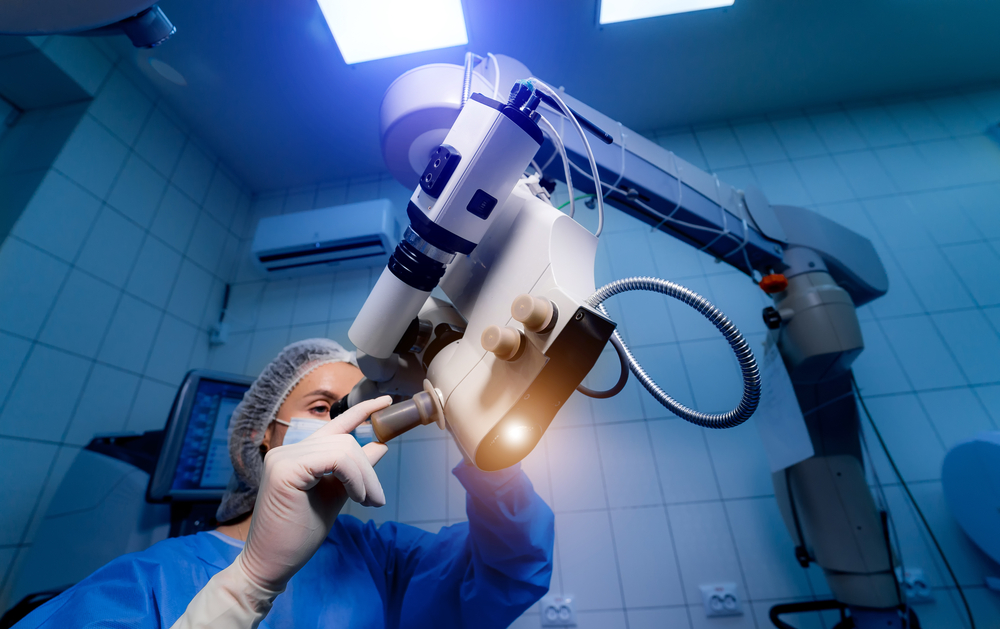
During LASIK, an excimer laser removes a precise amount of corneal tissue to change how light focuses on the retina. That tissue does not naturally grow back or change over time. The new corneal curvature is the curvature your eye keeps for the rest of your life, which is why the procedure is often described as permanent.
PRK works similarly by reshaping the front surface of the cornea, but rather than working beneath a flap, there is no flap created.
In both cases, the refractive conditions being treated, whether nearsightedness, farsightedness, or astigmatism, are corrected by physically altering the eye’s focusing power. So when someone says their LASIK stopped working, something else is almost always going on.
Why Some People Notice Their Vision Shift Years Later
Three things account for nearly every case of vision changing after a successful laser procedure, and only one of them has anything to do with the surgery.
1. Presbyopia Is Not the Surgery Failing
Somewhere in the early to mid-forties, the natural lens inside the eye begins to stiffen. A flexible lens can change shape to focus on close objects. A stiffening lens cannot, and reading a menu or a phone screen gradually becomes work. This is presbyopia, and it happens to everyone, including people who have never had eye surgery and people who have had perfect vision their entire lives.
LASIK reshapes the cornea. It does nothing to the natural lens, and it cannot stop the lens from aging. A patient who had distance vision corrected at 28 and picks up reading glasses at 46 has not lost the original correction. Distance vision is typically still sharp. Near vision is what changed, and it would have changed regardless.
2. Cataracts Eventually Change the Equation
Further along, that same natural lens starts to cloud. Cataracts develop in most people who live long enough, and they cause blurring, glare, poor night vision, and a washed-out quality to color. Cataract surgery remains fully available to patients who have had laser vision correction.
3. A Small Number of Eyes Do Drift
There is a third category. Patients treated for very high prescriptions, and patients treated young enough that their myopia had not fully stabilized, can see a modest amount of regression over the years. This is why surgeons want a prescription that has held steady for at least a year before scheduling surgery, and why a 19-year-old whose glasses change annually is usually asked to wait.
Procedures That Are Reversible by Design
The EVO ICL is an implantable lens positioned in front of the natural lens, and no corneal tissue is removed to place it. Because the lens is an implant rather than a change to your own anatomy, it can be removed or exchanged if a patient’s needs change. That makes it unique compared to laser correction, and a practical option for people with thin corneas or prescriptions too strong for LASIK.
Cataract Surgery and Lens-Based Procedures
Lens replacement is the closest thing in eye care to a result that genuinely lasts a lifetime.
An artificial intraocular lens does not cloud, yellow, degrade, or expire. Once the natural lens is removed, cataracts cannot come back, because the structure that formed them is gone.
However, there is one change worth knowing about. The thin capsule that held the natural lens stays in place to support the implant, and in some patients it hazes over months or years after surgery. Vision gets cloudy again, and people understandably assume the cataract returned. A brief in-office laser treatment clears the capsule, takes a few minutes, and does not require a return to the operating room.
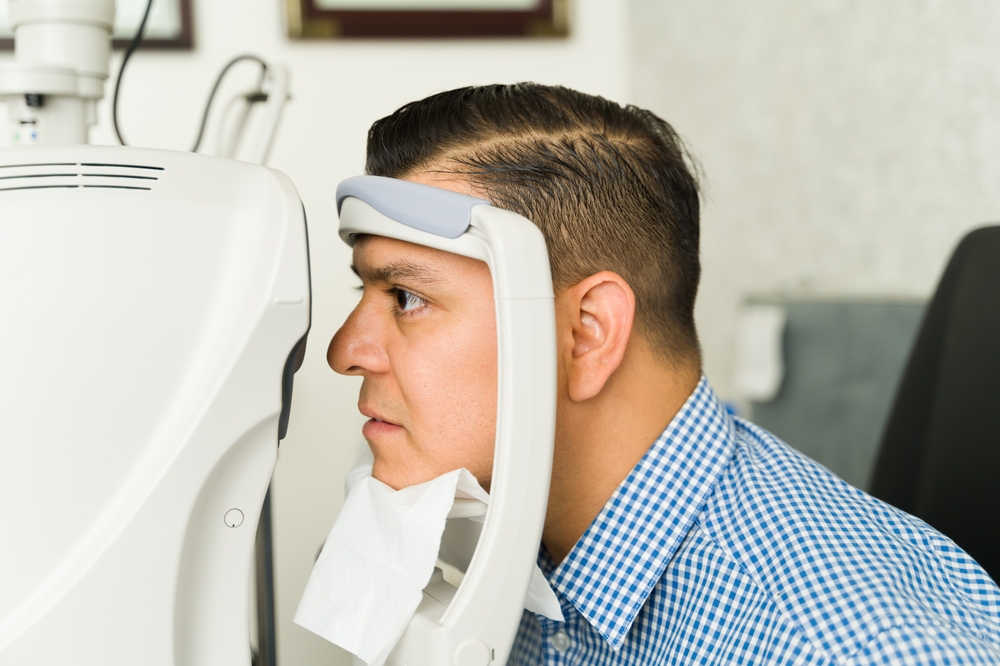
Patients who are past the age where LASIK makes sense but not yet dealing with cataracts sometimes choose refractive lens exchange, which replaces the natural lens before it becomes cloudy. The intraocular lens options available today include monofocal, multifocal, and extended range designs, and the choice shapes how much you rely on glasses afterward. That decision is worth real discussion at the consultation.
Can You Have Vision Correction Twice?
Yes, in many cases. Enhancement procedures are performed when a patient’s result drifts or the initial correction leaves a small amount of residual prescription. The limiting factor is corneal thickness. Every laser treatment removes tissue, and a cornea that started thin or was treated for a strong prescription may not have enough remaining depth for a second pass. When additional laser correction is not an option, a lens-based procedure often is. Surgeons plan for this possibility from the beginning, which is another reason the initial measurements are as thorough as they are.

What Actually Protects Your Result Long Term
Ongoing eye exams do more for your vision over a lifetime than any single procedure. Laser correction does not prevent glaucoma, macular degeneration, or diabetic retinopathy, and none of those conditions announce themselves early with obvious symptoms. Patients who assume surgery ended their need for regular exams are the ones who lose ground.
Wondering how long your vision correction results will last? Schedule an appointment at RGB Cataract & LASIK in Sherman, TX.